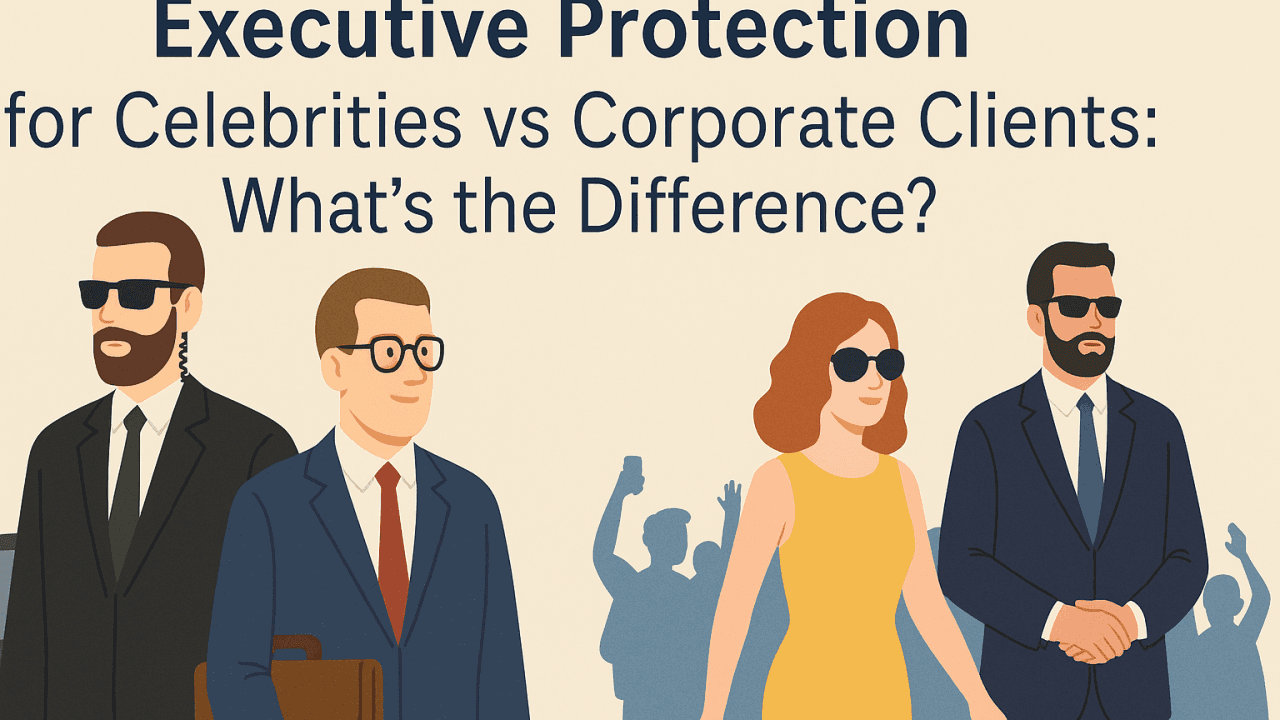
Executive Protection for Celebrities vs Corporate Clients: What’s the Difference?
Newsletter

Nathan Bell
Managing Director
Executive Protection is not one-size-fits-all. While the principles of safety, discretion, and professionalism remain the same, the day-to-day reality of protecting a celebrity vs a corporate client can be vastly different.
In 2025, the security industry must do more than deploy licensed operatives — it must understand the environment, expectations, and psychology of the person being protected.
Here’s a breakdown of the key differences between the two.
1. Public Visibility vs Privacy Sensitivity
Celebrity clients often attract attention simply by stepping outside. Paparazzi, fans, and online gossip accounts can create unpredictable crowd behaviour and media exposure.
Corporate clients, on the other hand, may operate in complete anonymity — but they still face risks from activist groups, insider threats, or rival interests.
What this means for teams:
With celebrities: focus on crowd control, media deflection, movement shielding
With executives: focus on discretion, advance planning, and business continuity
2. Lifestyle Demands and Scheduling
Celebrity movements are often last-minute, erratic, or media-influenced. That means plans change constantly from airports to events to afterparties.
Corporate clients usually operate on tight, pre-planned schedules driven by meetings, NDAs, and itineraries.
Operatives need to be:
Flexible, patient, and fast-moving for celebrity tasks
Structured, diplomatic, and time-sensitive for corporate details
3. Personality Management and Team Fit
In celebrity protection, you're often working in emotionally intense environments. Personal assistants, stylists, entourage, and family may all expect cooperation with no interest in security protocol.
With executives, you’re often liaising with security managers, drivers, or senior assistants who expect professionalism and structure.
Key skill required: Emotional intelligence knowing when to step in and when to blend into the background.
4. Risk Profiles and Threat Dynamics
Celebrities often face spontaneous threats:
Aggressive fans
Opportunist criminals
Media exposure
Stalkers
Corporate clients face:
Planned threats (e.g. protests, kidnap for ransom, IP theft)
Operational disruption
Cyber/physical crossover incidents
Good protection teams must: Adapt SOPs to the profile not just copy/paste one style of cover.
5. Appearance vs Capability
With celebrities, there’s often pressure to “look the part” but not in a Hollywood way. It’s about being camera-friendly, calm under pressure, and appropriate for the client's brand.
Corporate clients often value discreet capability over visual presence a smart suit and calm voice are sometimes more effective than visible strength.
Final Thoughts
Executive Protection is about understanding who you’re protecting not just how.
The more you understand the lifestyle, public exposure, and operational needs of your client, the better your protective strategy will be.
Close Protection is evolving and the best teams are those who can move fluidly between public-facing, high-pressure environments and quiet, business-critical detail without missing a beat.
What’s your take? Have you experienced the shift between celebrity and corporate tasks? What’s been the biggest difference for you on the ground?