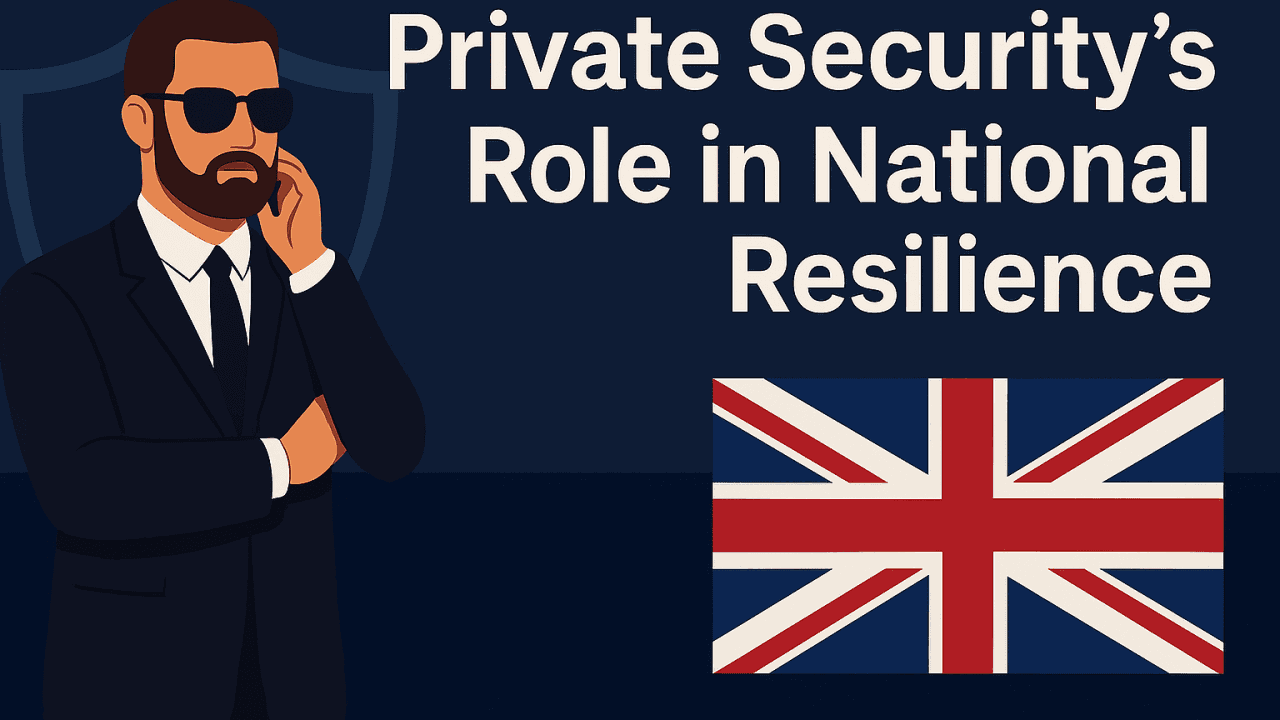
Private Security’s Role in National Resilience: The Silent Backbone of UK Stability
Newsletter

Nathan Bell
Managing Director
In today’s ever-evolving threat landscape, national resilience is no longer the sole responsibility of government forces. The private security industry has quietly become a critical layer in the UK's national security architecture often filling the gaps where public resources are stretched, supporting community stability, and preventing incidents before they make headlines.
From Observation to Intervention
Private security officers are often the first line of defence in protecting commercial sites, transport infrastructure, retail centres, religious venues, and events locations which can be both symbolic and vulnerable. These professionals act not just as deterrents, but as trained observers who can identify early signs of criminal or disruptive activity, and take action or escalate as needed.
This decentralised vigilance significantly reduces the burden on emergency services and police, especially during high-alert periods or when public services are under pressure.
Event Security and Crowd Risk Management
The UK hosts hundreds of high-footfall events each year. These gatherings are increasingly becoming targets for disorder, activism, or worse terrorism. Private security teams play an essential role in pre-event threat assessments, vehicle mitigation planning, screening, and rapid response.
Well-drilled private teams reduce reliance on overstretched police units, while still maintaining public safety and experience. The ability to neutralise threats without panic is a skill honed through regular deployment and continuous improvement.
Infrastructure and Business Continuity
During strikes, protests, natural disasters, or national emergencies, private security firms step in to secure critical infrastructure from warehouses to hospitals. They support business continuity by ensuring that supply chains remain intact, retail environments are kept safe, and frontline services like housing support or food delivery can operate without disruption.
By keeping businesses operational, they uphold the economic backbone of national resilience.
Cyber-Aware and Community-Connected
Modern private security isn't just about physical presence it's becoming increasingly integrated with cyber, data, and threat intelligence. Some firms now operate security operations centres (SOCs) that monitor digital threats, protest movements, and organised crime patterns. This intelligence sharing, when responsibly handled, strengthens national situational awareness.
Moreover, many security professionals live and work in the communities they serve. Their local knowledge allows them to sense shifts in tension before they escalate a critical asset in community-based resilience.
The Future of National Resilience Is Multi-Layered
As the UK prepares for future challenges from geopolitical instability to domestic activism the private security sector must be recognised as a formal contributor to national safety. It’s time for stronger public-private collaboration, better training pathways, and greater professional respect.
Because when the unexpected happens, it’s often a private security officer not a uniformed police officer who’s first on the ground.